Project Ventura
A platform to monitor forest conservation projects

Context
Client: Equinor, an international energy company
Role: UI/UX, prototyping and research
Duration: October 2022 to February 2023 (5 months)
Team: 1 project manager, 1 biologist, 1 business designer, 1 UX designer, 1 UI/UX designer (myself)
Brief
Forest conservation projects are meant to fight climate change, protect biodiversity and support local communities. To show that they actually do, every project has to be monitored and verified over many years. Today, project developers and biologists track this work in static documents: reports, spreadsheets and maps that are slow to produce, costly to maintain and hard to keep current. With information spread across files, it is difficult to see how a project is doing at a glance, spot risks early or prove its impact.
That’s why Equinor is building a platform for this. We were asked to create a concept for it that simplifies the work of forest project developers, bringing their project data into one place so they can track progress, spot risks and prove impact.

Example of a traditional documentation of forest conservation projects
Solution
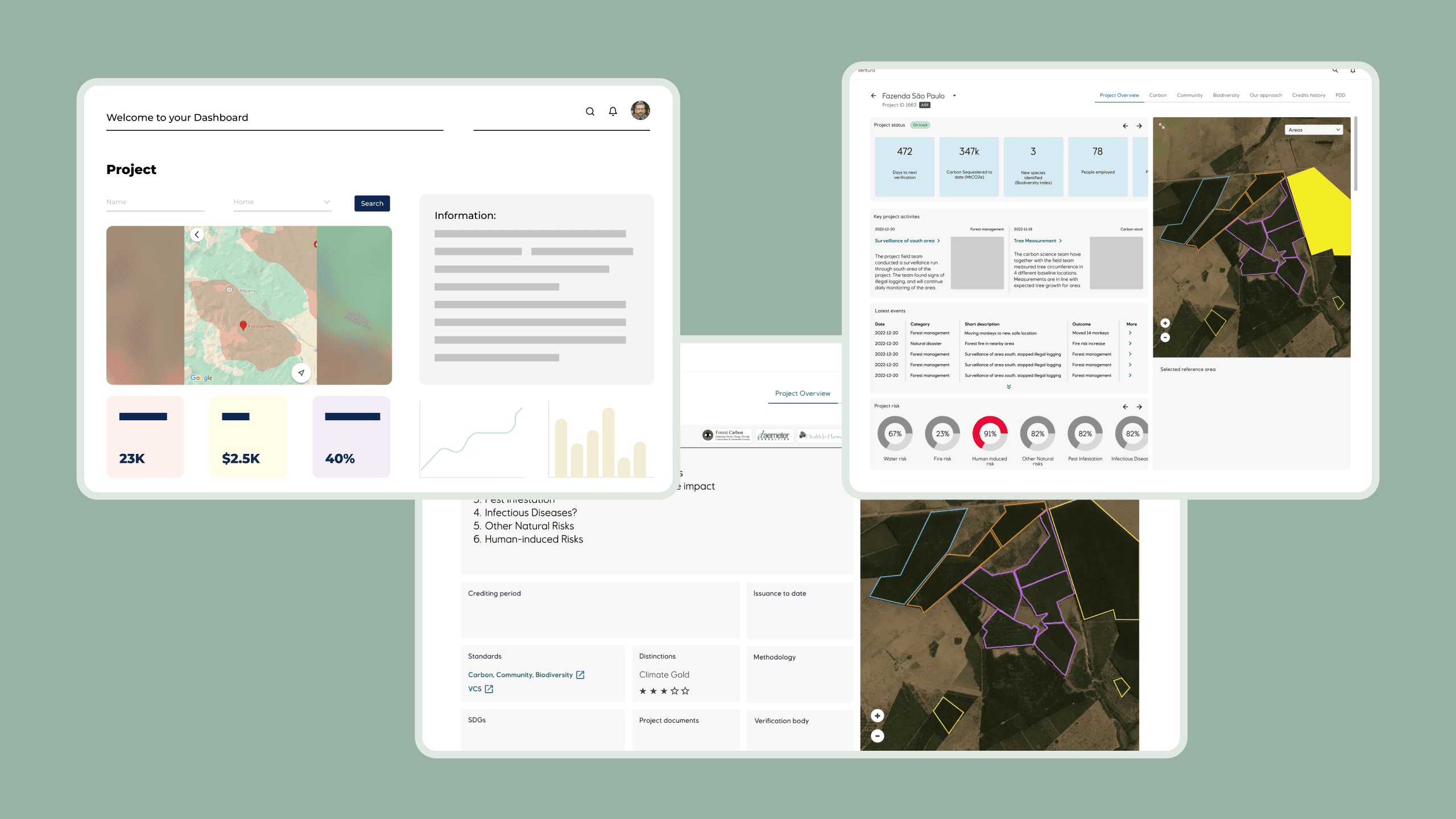
The homepage of the new platform provides project managers with a quick overview of their projects, featuring status, KPIs, and a map.
For more detailed information, they can navigate to a specific project. There they can see an interactive map, the project timeline, key activities, potential risks and camera trapping images.
Results
Through meticulous user research and iterative design, I transformed the complex procedure of forest conservation monitoring into an easy-to-use digital tool. This tool optimises processes and is estimated to reduce time and costs by up to 50%. Stakeholder feedback has been overwhelmingly positive, highlighting the clear and accessible interface as a significant improvement.
Process
1. User interviews
We started the project by interviewing biologists and forest project developers to better understand their needs, the processes, and the information they deal with.

2. Information architecture
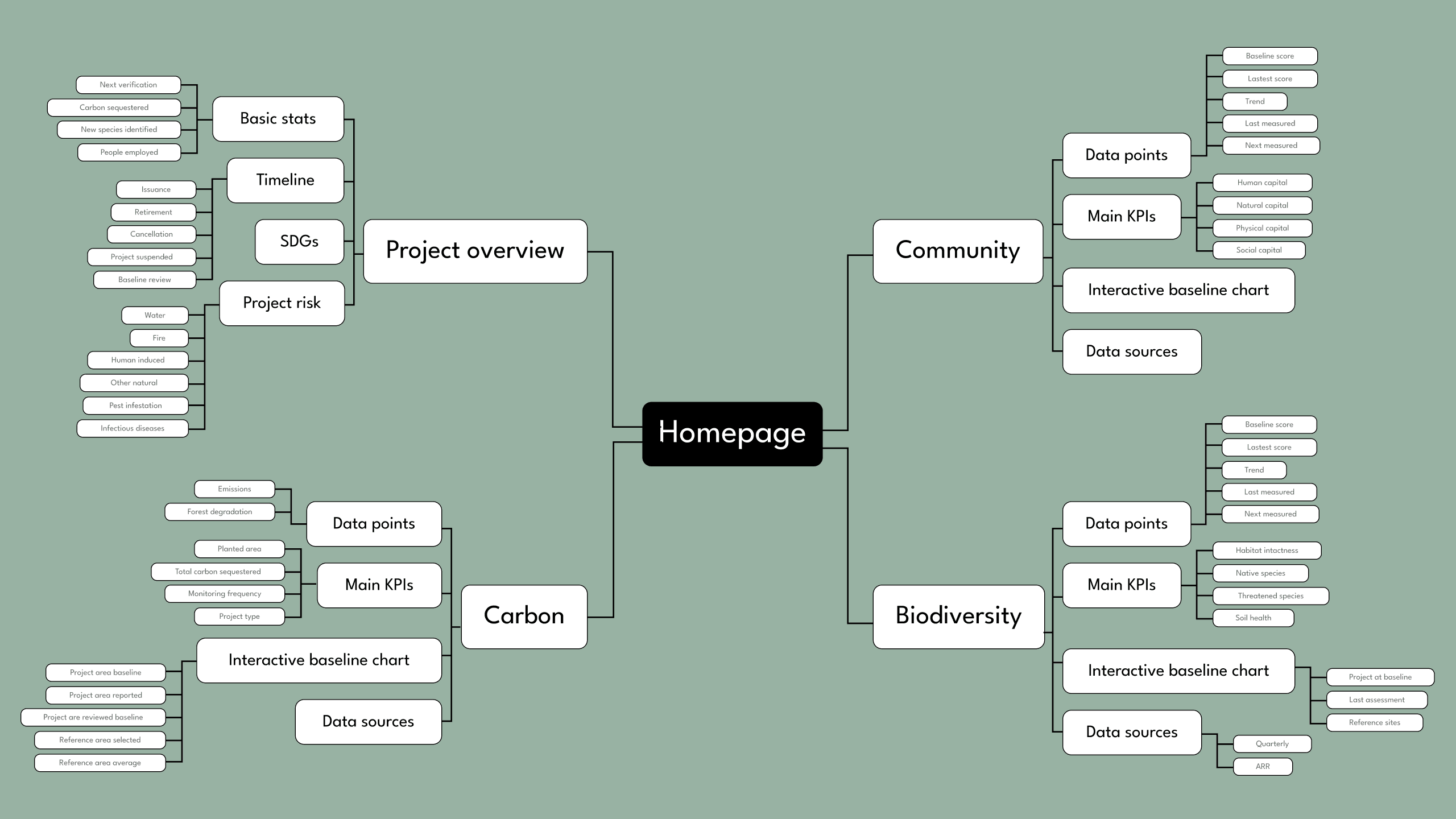
Using this data we created a mind map to visualise how all the information is connected.
3. Concept development
The UX designer from Equinor and I divided the topics and worked on them in 2-week sprints, starting with wireframes. We held regular design critiques and co-creation sessions with the stakeholders to incorporate their valuable feedback and iterate on our concept.


Additional work has been carried out on this project, but it is currently confidential.